
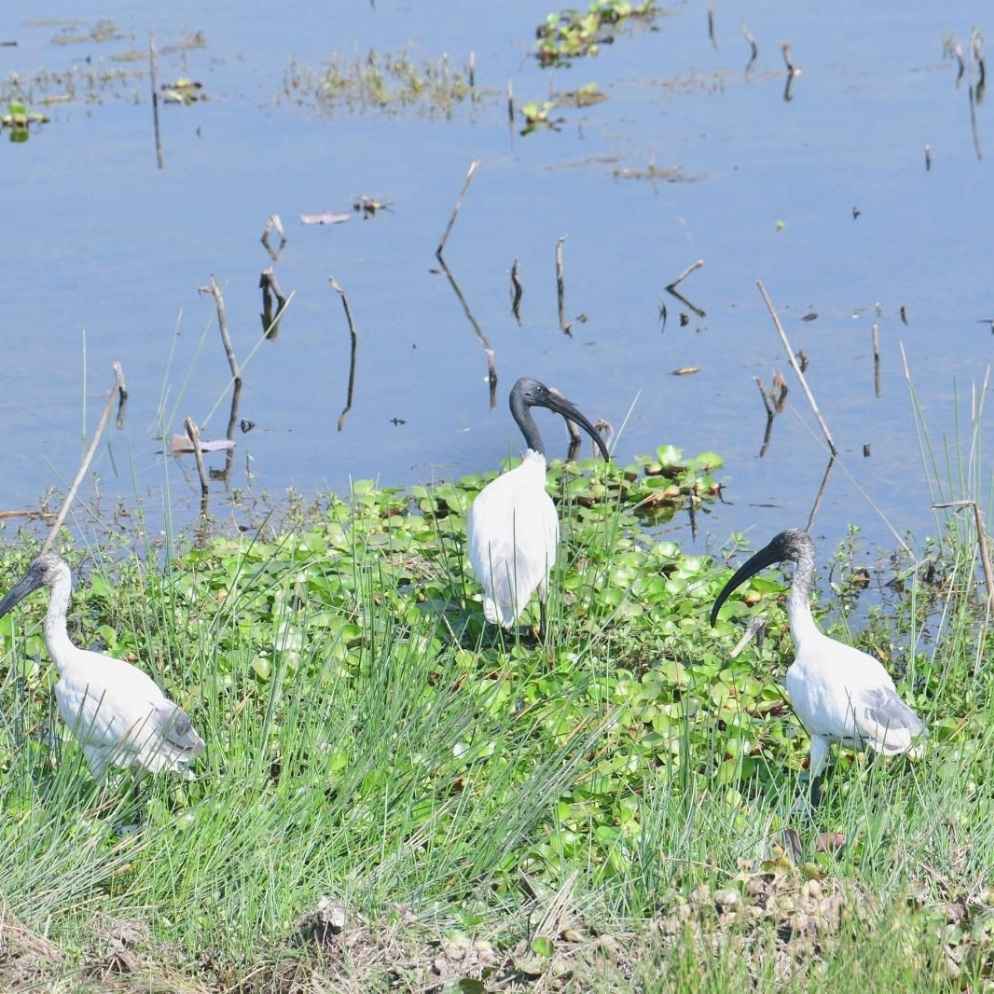
Wetlands are among Earth’s most productive ecosystems- providing flood control, groundwater recharge, water purification, and habitat for migratory birds. In recent years, under Prime Minister Narendra Modi’s guidance, the Indian government has ramped up efforts to protect, restore, and wisely manage wetlands nationwide. Below is an overview of key steps, policies, and recent developments in India’s wetland conservation journey.
Ramsar Site Additions & Recognitions
One of India’s most visible strides has been the designation and recognition of new Ramsar Sites (wetlands of international importance). On June 4, 2025, the Government of India announced that two new wetlands in Rajasthan- Khichan (Phalodi) and Menar (Udaipur) were added to the Ramsar list. With these, India now has 91 Ramsar Sites, making it one of the largest networks of internationally recognized wetlands in Asia.
Prime Minister Modi lauded this development, highlighting how public participation and environmental consciousness are powering India’s conservation mission.
Also, Indore and Udaipur have been recognized as Ramsar-accredited cities for their meaningful effort in wetland conservation within urban landscapes.

Wetland conservation in India
New Schemes: Amrit Dharohar & MISHTI
On World Environment Day 2023, the government launched two flagship wetland-related schemes:
Amrit Dharohar: This scheme focuses on the conservation and revitalization of designated wetlands and Ramsar sites. It aims to align local communities with wetland protection and turn these sites into eco-tourism and livelihood hubs.
MISHTI (Mangrove Initiative for Shoreline Habitats and Tangible Incomes): Aimed at mangrove restoration along India’s coastline, MISHTI works across multiple states to protect shoreline ecosystems, improve resilience, and provide income opportunities to coastal communities. The Centre covers 80% of project costs while the states contribute 20%.
These schemes are part of a broader push to integrate wetlands policymaking with community participation and sustainable development.
India’s Resolution at Ramsar COP-15: Sustainable Lifestyles for Wetlands
At COP-15 of the Ramsar Convention in Zimbabwe (2025), India proposed a resolution titled “Promoting Sustainable Lifestyles for the Wise Use of Wetlands”. The resolution was adopted unanimously by over 172 contracting parties.
The resolution promotes:
Behavioral change- encouraging communities to adopt pro-planet practices that reduce waste, conserve water, and protect ecosystems.
Integration of sustainable lifestyle interventions into wetland management plans, using education, awareness, and public-private collaboration.
The resolution aligns with Mission LiFE (“Lifestyle for Environment”) launched by PM Modi, linking lifestyle changes to environmental protection.
This move strengthens India’s narrative that wetland conservation is not only about policies but also about everyday choices by citizens.

Modi government environment initiatives
Wetland Mapping, Demarcation & Citizen Participation
Implementation on the ground is critical. Under the Ministry of Environment, Forest & Climate Change, the Wetlands of India Portal provides mapping, inventory, and information about wetlands.
Over the past 3 years, India has:
Engaged 2 million+ volunteers under campaigns like Mission Sahbhagita and Save Wetlands.
Mapped 170,000+ wetlands and demarcated clear boundaries for approximately 120,000 wetlands. Press Information Bureau+1
This participative approach helps in enforcement, awareness, and community stewardship.
Challenges & What Needs Focus
While progress is significant, challenges remain:
Encroachment, pollution, and unregulated development threaten many wetlands.
Maintenance funding and long-term management often lag behind initial conservation plans.
Coordination between central, state, and local bodies is needed for consistent enforcement.
Balancing development and wetland protection- urban expansion, infrastructure projects, and land conversion pose real threats.
Why It Matters for India’s Future
Climate resilience: Wetlands act as natural buffers during floods and droughts.
Biodiversity conservation: They support migratory and endemic species.
Water security & purification: Wetlands filter pollutants and recharge aquifers.
Livelihoods & eco-tourism: Properly managed wetlands can generate income for local communities.
PM Modi’s leadership reflects a shift: wetlands are not secondary nature features- they are vital infrastructure in a changing climate.