India’s MSME sector (Micro, Small, and Medium Enterprises) is the backbone of our economy, contributing nearly 30% of GDP and employing millions. Yet, many MSMEs are limited to local markets because they don’t know how to sell their products globally.
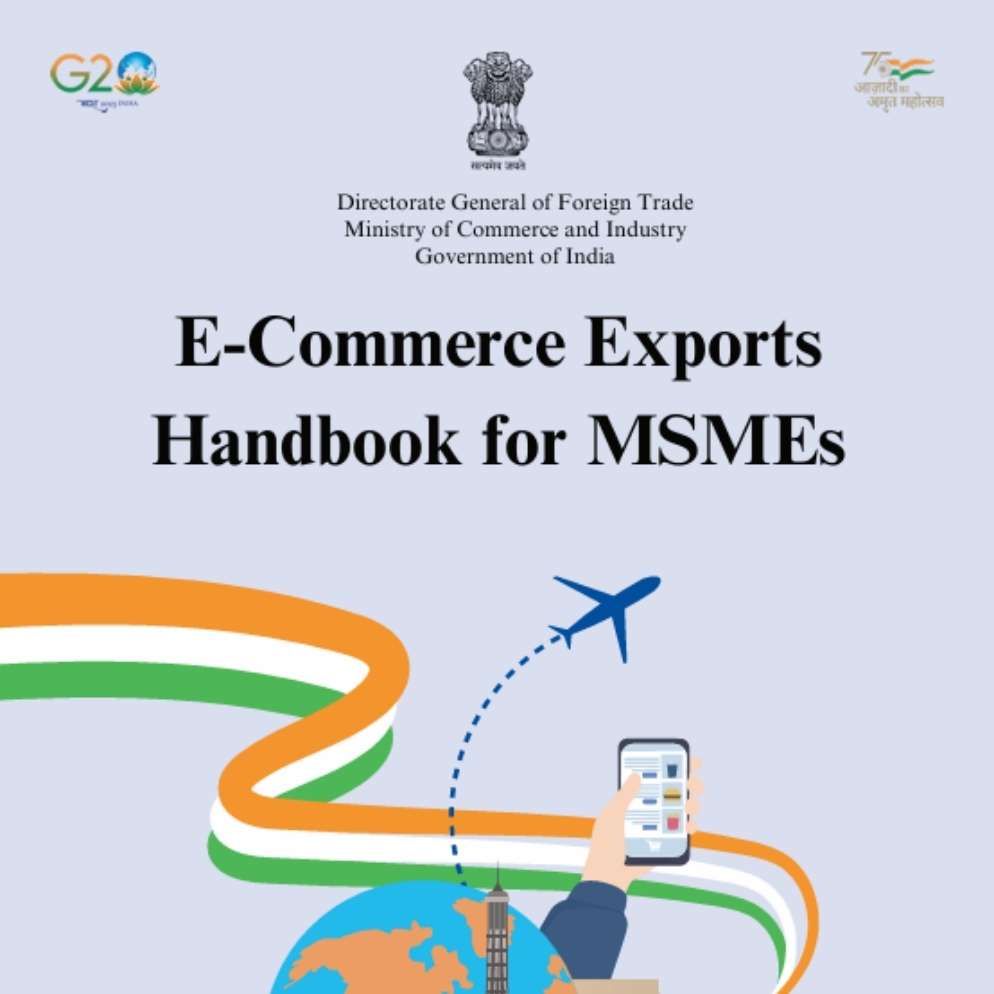
To solve this, the Directorate General of Foreign Trade (DGFT) has released the E-Commerce Export Handbook for MSMEs, a simple, step-by-step guide to help small businesses start exporting via online platforms like Amazon, eBay, Etsy, Flipkart, and others.
This blog explains every step in detail, so even someone with no prior knowledge can understand how to benefit.
Step 1: Understanding Why E-Commerce Exports Matter
Selling online to global customers is different from traditional exports. Instead of large shipments to foreign buyers, e-commerce exports are usually small parcels sent directly to individuals abroad.
Why is this important for MSMEs?
- You can reach global customers without setting up a foreign office.
- You get better profit margins by selling directly to end customers.
- You can start with a low investment – just a catalog, good packaging, and reliable shipping.
- Demand is growing for Indian handicrafts, textiles, spices, jewellery, and organic products.
Step 2: What Products Can You Sell?
The handbook highlights sectors where India has strong export potential:
- Handicrafts & handloom products – carpets, rugs, home décor
- Spices, tea, coffee, ayurvedic & herbal products
- Leather goods & footwear
- Jewellery (non-precious, imitation, semi-precious stones)
- Beauty & wellness products
- Engineering parts, auto accessories, IT gadgets
Check rules first: Some products are restricted or prohibited for export (like medicines, certain chemicals, wildlife items). Always verify on DGFT’s website before listing.
Step 3: Basic Registrations Needed
Before you start exporting, you need a few registrations:
- IEC (Import Export Code) – This is your business passport for global trade. Apply free on the DGFT portal.
- GST Registration – Needed for invoicing and tax compliance.
- Bank AD Code – Register your bank account with Customs so export payments can be verified.
- Platform Registration – Create a seller account on Amazon Global, eBay, Etsy, or other export platforms.
Pro Tip: Many state governments have MSME support cells that help you get these registrations at low/no cost.
Step 4: Product Classification (HS Code)
Every product exported is identified by a 6- to 8-digit HS Code (Harmonized System Code).
Example:
- Hand-knotted carpets: HS Code 5701
- Spices: HS Code 0904
This code decides:
- Whether your product is freely exportable or restricted
- What duties/taxes apply
- Whether you can claim incentives like RoDTEP (Remission of Duties and Taxes on Export Products)
The DGFT handbook gives guidance on finding your HS code.
Step 5: Choosing the Right Market
Not every product sells everywhere.
- Indian diaspora in the USA, UK, and Canada loves handicrafts, ethnic wear, and puja samagri.
- Middle East & UAE have a high demand for jewellery, spices, and carpets.
- Europe demands organic, eco-friendly, sustainable products.
- Japan prefers minimalistic, handmade, high-quality goods.
💡 Strategy: Start with 1–2 markets where your product already has demand.
Step 6: Logistics – How Will You Ship?
This is where many MSMEs get stuck, but the handbook simplifies it:
Two options:
India Post (Dak Niryat Kendras)
- Best for small parcels.
- Affordable shipping.
- Tie-up with DGFT ensures exports through the post are now officially recognized.
Private Couriers (DHL, FedEx, Shiprocket, BlueDart, etc.)
- Faster deliveries.
- Integrated with ECCS (Express Cargo Clearance System) for customs.
- Best for bulkier shipments.
Key documents needed for shipping:
- Commercial invoice
- Packing list
- Shipping label
- Customs declaration (CSB-IV for courier, Postal Bill of Export for India Post)

Step 7: Receiving Payments
Payments must come via legal channels. Options include:
- Payment Gateways – PayPal, Razorpay, Stripe, etc.
- Export Platforms – Amazon or eBay deposits money directly into your bank.
- Bank Transfers – Through AD Bank, linked to your IEC.
GST Refunds: You can claim back IGST paid on exports.
Step 8: Government Incentives You Can Use
The handbook is not just about process, but also about benefits:
- RoDTEP Scheme: Refunds hidden taxes (like fuel, electricity duty) on exports.
- Districts as Export Hubs (DEH): Special training and marketing support for local MSMEs.
- MoU with Shiprocket: MSMEs get discounted shipping, training, and packaging support.
- Niryat Bandhu: DGFT officers guide and mentor first-time exporters.
Step 9: What If Goods Are Returned?
Sometimes international buyers return products.
- If returned, you must re-import them legally with proper documentation.
- This ensures you don’t lose benefits like GST refunds.
Step 10: How to Learn More
The handbook is available on the DGFT website in multiple regional languages.
👉 Download it here
It includes sample forms, flowcharts, and FAQs for beginners.
The DGFT’s E-Commerce Export Handbook for MSMEs is a game-changer because:
- It removes fear and confusion around exports.
- It opens global markets for even the smallest business.
- It provides government support in shipping, payments, and training.
If you are an MSME owner, artisan, or entrepreneur, this is the ideal time to expand globally.
At SESR Foundation, we believe that digital tools and government schemes like this are vital in bridging the digital divide and empowering entrepreneurs. Through awareness drives, training, and skill-building, we aim to ensure that every MSME has the confidence and capacity to export proudly – Made in India, Sold Worldwide.